What Percentage of People Fail the Ontario G1 Test?
Search "G1 pass rate" and you will get a different answer on every page. One site says 30 to 40 percent of people fail their first try. Another says half. A third claims a failure rate as high as 70 percent. A fourth insists 98 percent of students pass. They cannot all be right, and none of them cite where the number came from.
Here is the part nobody leading these search results will tell you: the Ontario Ministry of Transportation does not publish a first-attempt pass or fail rate for the G1 knowledge test. There is no official figure to disagree about. Every percentage you have read is an estimate, and most are estimates with no stated method behind them.
That absence is the real story, so let us start there.
The short answer: no official number exists
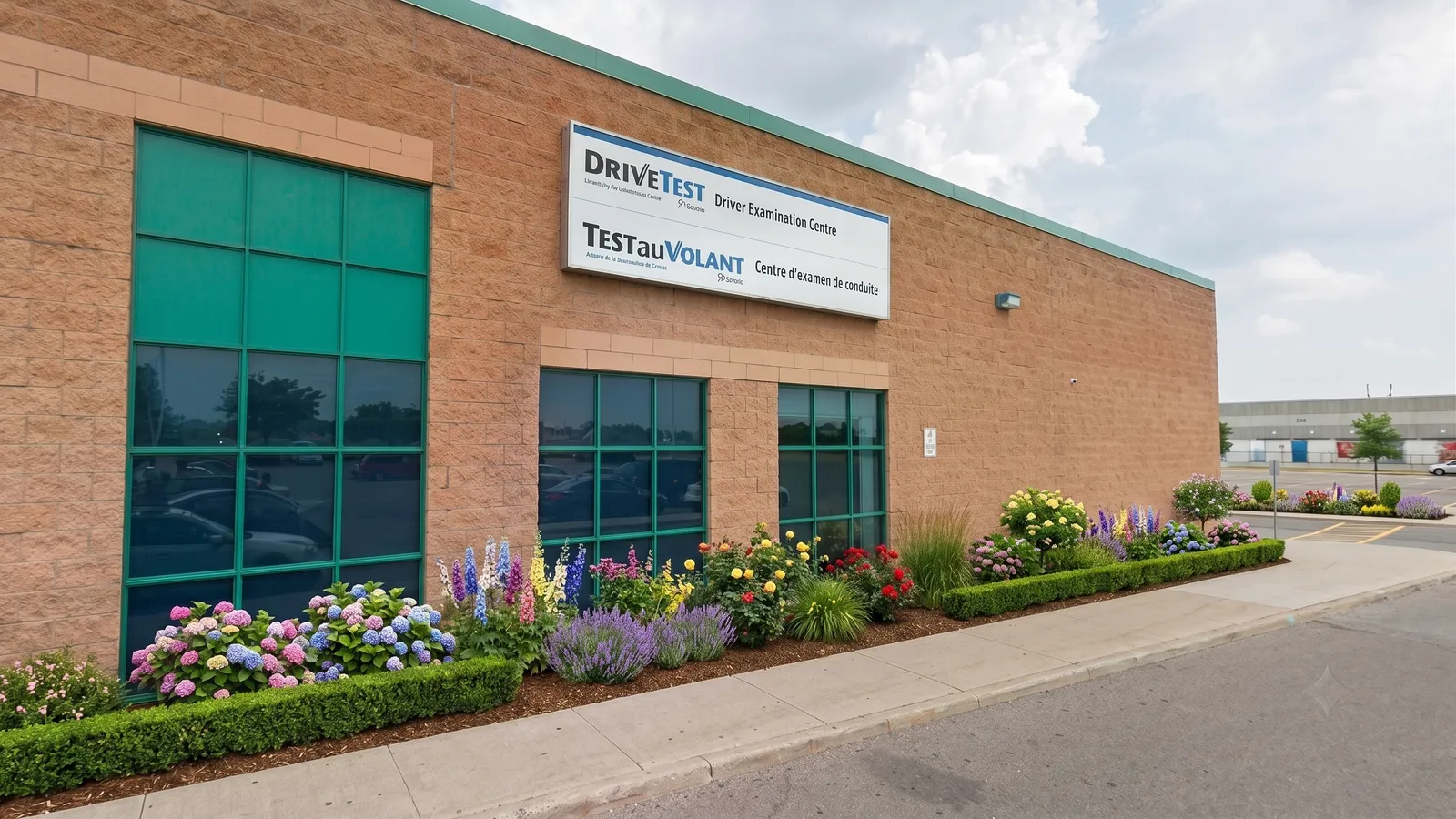
We checked the government sources directly. Ontario's own page on getting a G driver's licence describes the knowledge test and its requirements but publishes no pass or fail statistic. DriveTest, the network of test centres run by Serco Canada under contract to the province, does not publish one either. The MTO Driver's Handbook does not contain one.
So when a driving-school blog tells you "X percent of people fail the G1," it is not quoting the government. It is either sharing its own internal data, repeating a number it found on another blog, or estimating. Some of those estimates are reasonable. Some are marketing. The problem is that they are almost never labelled as either.
The closest thing to hard, official-adjacent data that exists in Ontario is for the road tests, not the knowledge test. In 2023, CBC Hamilton obtained DriveTest pass rates through a freedom-of-information request and found the province-wide road-test pass rate averaged about 69 percent, ranging from 59 percent in Brampton to 88 percent in Bancroft. Note two things about that. First, it took a formal records request to pry the numbers loose, because they are not routinely published. Second, those figures are for the G2 and G road tests, not the written G1. No equivalent dataset for the G1 knowledge test has been released.
Why the estimates are all over the map
Once you accept that there is no official denominator, the wild spread between "30 percent fail" and "70 percent fail" stops being mysterious. Four things drive it.
No official stat means everyone fills the vacuum. When authoritative data does not exist, the most confident-sounding number wins the search result, not the most accurate one. A blog that states "37 to 51 percent fail" with no source will outrank an honest "we don't actually know," because it reads as specific.
The data that does exist is self-reported. Driving schools and practice-test sites know only their own users. A school that reports a 98 to 99 percent first-time pass rate is describing people who paid for lessons and practised, which is a filtered, motivated group. That number is probably true for that group. It is useless as a province-wide figure, because the people most likely to fail are the ones who never signed up.
Retakers get counted differently. A "pass rate" can mean the share of people who pass on their first attempt, or the share of all test sittings that end in a pass, or the share of people who eventually pass. Because you can rebook the G1 knowledge test for a small fee and retry, most people pass eventually. So "how many pass" and "how many pass the first time" are very different questions, and sources rarely say which one they are answering.
Sample bias runs in both directions. A practice-test company has an incentive to make the test sound hard (so you buy practice) or easy (so you feel their product works). A driving school selling lessons benefits from "half of people fail on their own." None of this makes the numbers fabricated, but it means the framing is doing work.
Here is how the commonly cited figures actually break down.
| Claim you will see | Typical source | What is actually behind it |
|---|---|---|
| "30 to 40 percent fail first try" | Driving-school and prep blogs | Estimate, no cited method |
| "37 to 51 percent fail" (unprepared) | Driving-school blog | Estimate, no source cited |
| "50 to 70 percent fail" | Prep and practice-test sites | Estimate, no source cited |
| "98 to 99 percent pass first time" | Driving schools, for their own students | Real, but only for paying, prepared students |
| Road test avg 69% pass (59-88% by centre) | CBC, via freedom-of-information request | Real official data, but road test, not G1 |
The only honest reading of that table: the G1 written test fail rate is genuinely unknown at the provincial level, and the credible estimates cluster loosely somewhere around a third to a half of first-time takers among people who do not seriously prepare. Treat that as an estimate, not a fact, because that is what it is.
What actually is official about the G1
The test structure is verified and worth knowing, because it changes how you should read the fail-rate noise. The G1 knowledge test has 40 multiple-choice questions split into two sections: 20 on road signs and 20 on the rules of the road. You must score at least 16 out of 20, which is 80 percent, in each section separately. Ace signs and get 15 on rules, and you fail. There is no partial credit across sections.
That 80-per-section threshold is the mechanical reason a lot of otherwise-prepared people fail. It is easy to over-study the signs, which are visual and memorable, and under-study the rules of the road, which are wordier and less fun. If most of your prep time went into signs, you can walk in feeling ready and still miss the rules cutoff by one question.
So is the G1 hard?
The honest frame is this: the G1 is not a hard test, but it is an easy test to fail if you treat it as common sense. The questions are answerable by anyone who has read the handbook once with attention. They are not answerable by guessing from everyday driving intuition, because a lot of the rules are more specific than people assume.
That is why "is the G1 hard" and "do people fail the G1" have different answers. The test is fair. A meaningful share of people fail it anyway, and preparation, not difficulty, is what separates the two groups. The one measured signal we have, DriveTest road-test data, shows pass rates in the high 60s even for a test people usually take lessons for, which tells you plenty of Ontario drivers walk into exams underprepared.
Why people actually fail (the useful part)
If you want to not be in the failing group, ignore the percentage arguments and look at where people lose marks. The patterns are consistent, and one Ontario practice-test platform's own answer data shows the same clustering: the most-missed questions are about licence restrictions and test rules (missed by roughly a third of test-takers on that platform), regulatory signs and their specific meanings (missed by about the same share), and passing, lane changes, and merging.
Three failure causes come up again and again.
Right-of-way questions. These are the classic trap. Who goes first at a four-way stop, how yielding works at an uncontrolled intersection, when a left-turning driver must wait. People answer from habit rather than the rule, and habit is often wrong.
Misreading the question. A large share of wrong answers are not knowledge failures, they are reading failures. Questions with "except," "not," or "always" flip the correct choice, and a rushed reader picks the answer that is true in general but wrong for the specific question asked.
Studying the signs, skipping the rules. Because signs feel like the whole test, people memorize shapes and colours and neglect the rules-of-the-road section, then fail on the half they under-prepared.
We break down the exact question types that trip people up, with the correct reasoning for each, in the hardest G1 questions, explained. If you read one thing before your test, read that.
The takeaway is not "don't worry, most people pass." It is narrower and more useful: the G1 rewards a few hours of honest preparation and punishes the assumption that you already know this. Which group you land in is almost entirely within your control.
Frequently asked questions
What is the G1 pass rate in Ontario?
There is no official G1 pass rate. The Ontario Ministry of Transportation and DriveTest do not publish one. Estimates online range from about 30 percent to 70 percent failing on the first try, but none cite an official source, so treat every one of them as an unverified estimate.
How many people fail the G1 test?
Nobody knows the exact figure, because it is not officially tracked or published. Credible estimates loosely suggest somewhere around a third to a half of unprepared first-time takers fail, while people who study or take lessons pass at much higher rates. These are estimates, not government statistics.
Is the G1 test hard?
The G1 is not a difficult test if you read the MTO Driver's Handbook, but it is easy to fail if you rely on everyday driving sense. The questions are specific, and you need 80 percent in each of two sections, so guessing does not work well.
What score do you need to pass the G1?
You must get at least 16 out of 20, which is 80 percent, in each of two sections: road signs and rules of the road. You have to clear both. Passing one section but not the other means you fail the test.
Can you retake the G1 if you fail?
Yes. If you fail the knowledge test you can rebook and retry for a small retest fee. Most people who fail the first time pass on a later attempt, which is part of why "eventual pass rate" and "first-attempt pass rate" are very different numbers.
Why do so many people fail the G1 the first time?
The most common causes are right-of-way questions answered from habit, misreading questions that contain words like "except" or "not," and studying the road signs while neglecting the rules-of-the-road section. Almost all of it comes down to preparation, not test difficulty.
Ready to start studying?
Work through real Canadian practice questions with instant explanations, and track your readiness before you book.
Practise real G1 questions before test dayFree practice tests for every province and territory