Saskatchewan Class 7 Numbers Cheat Sheet: Every SGI Figure on One Page
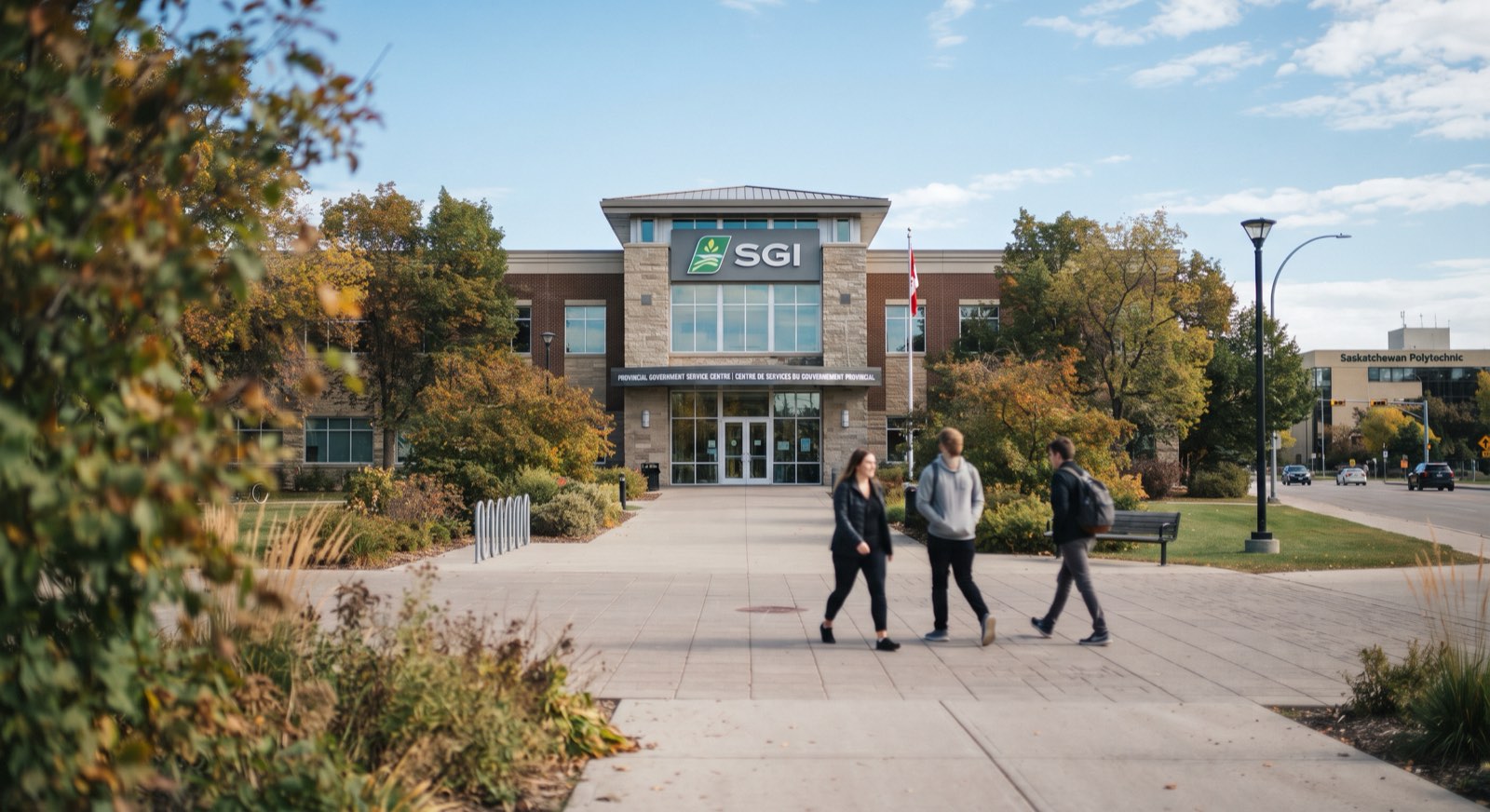
The sheet has 66 rows. Each was checked against the SGI Driver's Handbook 2026-27, The Traffic Safety Act, The Driver Licensing and Suspension Regulations, 2006, or The Summary Offences Procedure Regulations, 1991, with some figures also confirmed on saskatchewan.ca. No driving school, forum or prep site was used.
The Class 7 Learner knowledge test rewards people who know where Saskatchewan's numbers really come from, because a few of them are not what the handbook's shorthand suggests.
Start with a correction on our side. One question asked about a Novice 1 driver and the midnight to 5 a.m. rule that every passenger must be immediate family. The handbook's graduated licensing table and section 9(2)(a) of the licensing regulations put that rule on the Class 7 Learner. Novice 1 has a different limit: one passenger who is not immediate family. The question has been flagged for fixing.
Then the fines. The handbook says fines triple in work zones, but the regulations show something narrower: the per km/h rate triples ($6 and $12, against $2 and $4), while the base amount is $240 against $100. The $360 minimum for passing a school bus is not in the Act either, which sets only a $1,000 maximum. It is a $300 specified penalty plus the $60 victim surcharge.
Roadside suspensions are the third trap. The Highway Traffic Board page says one year for a new driver's third offence, but the Act and the handbook both say 18 months. New drivers get 60 days, 120 days, then 18 months. Experienced drivers get 3, 21 and 90 days.
The demerit ladder is the open question. The 2026-27 handbook puts the first 30-day suspension at 21 points, yet a 2016 order describes it at 18. We could not read the current regulation text, so the rows at 18, 21, 24 and 27 points are marked single source and carry a visible warning.
On gaps: 20 rows rest on one official source, usually the handbook alone, and say so. Nothing was published without a source. Several official facts, such as the collision reporting threshold and per-offence demerit points, are left off because our questions do not test them or no source states them.
Saskatchewan Class 7 Learner, Graduated Driver Licensing (Learner, Class 5 Novice 1, Class 5 Novice 2) · Numbers reference
Every number the Saskatchewan Class 7 Learner, Graduated Driver Licensing (Learner, Class 5 Novice 1, Class 5 Novice 2) knowledge test can ask you for, in one place, checked against the official sources and built to print.
Showing all 66 numbers
Speed limits and passing speeds
6 numbers| Value | Rule |
|---|---|
| 80 km/h | Default speed limit on a highway with no posted signsApplies where no signs are erected. Urban centres post their own limits at the entrances. |
| 60 km/h | Maximum speed when passing a stopped emergency vehicle with its emergency lights in operationDoes not apply on the opposite roadway of a divided highway. It does apply on the opposite side of an undivided highway. |
| 60 km/h | Maximum speed when passing a tow truck stopped at the roadside with amber or amber and blue lights flashingThe tow truck must be assisting a disabled vehicle. Does not apply on the opposite roadway of a divided highway. |
| 60 km/h | Maximum speed when passing Ministry of Highways and Infrastructure equipment with warning lights flashingA moving snow plow can be passed if it is safe, with no 60 km/h limit. The limit applies to plows and highway equipment stopped with their lights flashing. |
| Less than 40 km/h | Slow moving vehicle sign: vehicles travelling slower thanThe sign is mounted on the rear of the vehicle to warn drivers approaching from behind. |
| 10 to 40 km/h | Typical travelling speed of farm equipment on the roadA description of how slowly it moves, not a legal limit. Pass only when it is safe. |
Distances and following times
13 numbers| Value | Rule |
|---|---|
| 3 seconds | Minimum following distance under good conditionsAny longer distance is safe. A longer distance is recommended behind a motorcycle or a large truck. |
| 3 seconds, the same as for other vehicles | Following distance behind a motorcycle on a dry roadAllow more room when the road is wet or slippery. |
| 5 seconds | Following distance during the first few snowfalls of the seasonAlso drive very slowly while you adjust from summer driving habits. |
| At least 2 gates | Gates to keep open around your vehicle on a freewayThe four gates are ahead, behind and on each side. Keep a three-second following distance as well. |
| At least 30 m | How far before a turn to signal when driving under 60 km/hThe handbook calls this a good rule. |
| At least 150 m | How far from the corner to signal at higher speeds (faster than 60 km/h)The handbook calls this a good rule. |
| At least 20 seconds | Clear sight time each way before a U-turn in a 60 km/h areaThe handbook gives it as an example of adequate sight distance. |
| At least 40 seconds | Clear sight time each way before a U-turn in a 100 km/h areaThe handbook gives it as an example of adequate sight distance. |
| Within 3 m of the intersection | Where to stop at a stop sign with no stop line, sidewalk or crosswalk: city, town, village or hamletThe Act says no further than three metres back from the intersection. |
| Within 10 m of the intersection | Where to stop at a stop sign with no stop line, sidewalk or crosswalk: rural areaThe Act says no further than 10 metres back from the intersection. |
| 5 m (15 ft) | Minimum distance to stop from a school bus with its stop arm out and red lights flashingApplies at the front and the back of the bus, but you need not stop for a bus travelling the opposite way on a divided highway. Do not move until the lights and stop arm are off. |
| 200 m (650 ft) | Dim your high beams at least this far from an oncoming vehicleKeep the lights on low beam until the other vehicle has passed. |
| 100 m (330 ft) | Keep headlights on low beam within this distance when following another vehicle or being passed |
Stopping and parking
2 numbers| Value | Rule |
|---|---|
| More than 30 m | Distance from a vehicle stopped on the opposite side when you stop on a rural road or highwayApplies outside hamlets and municipalities other than rural municipalities. Stop at the right-hand edge. |
| At least 2 m longer than your vehicle | How much longer than your vehicle a parallel parking space should beIf unsure, stop beside the space and check. |
Driver Improvement Program demerit points
8 numbers| Value | Rule |
|---|---|
| 9 or more points | Program information letter |
| 12 or more points | Warning letter |
| 15 or more points | Defensive Driving Course |
| 18 or more points | Driver Improvement TrainingHandbook ladder (section 8.4). The 2016 order OC 266/2016 that amends the licensing regulations describes a 30-day suspension at 18 demerit points in a two-year period, which does not match this table. |
| 21 or more points | 30-day suspensionHandbook ladder (section 8.4). The 2016 order OC 266/2016 that amends the licensing regulations describes a 30-day suspension at 18 demerit points in a two-year period, which does not match this table. |
| 24 or more points | 90-day suspensionHandbook ladder (section 8.4). The 2016 order OC 266/2016 that amends the licensing regulations describes a 30-day suspension at 18 demerit points in a two-year period, which does not match this table. |
| 27 or more points | 180-day suspensionHandbook ladder (section 8.4). The 2016 order OC 266/2016 that amends the licensing regulations describes a 30-day suspension at 18 demerit points in a two-year period, which does not match this table. |
| 33 or more points | SGI manual review and penalty |
Suspensions and vehicle impoundments
13 numbers| Value | Rule |
|---|---|
| 60 days | New driver roadside licence suspension: first offenceNew driver, detectable alcohol or drugs, 10-year look-back. Transporting a passenger under 16 adds impoundment time. |
| 120 days | New driver roadside licence suspension: second offenceNew driver, detectable alcohol or drugs, 10-year look-back. Transporting a passenger under 16 adds impoundment time. |
| 18 months | New driver roadside licence suspension: third and subsequent offenceNew driver, detectable alcohol or drugs, 10-year look-back. Transporting a passenger under 16 adds impoundment time. |
| 3 days | Experienced driver roadside licence suspension: first offenceExperienced driver, BAC over .04 to .08 or drugs, 10-year look-back. Transporting a passenger under 16 lengthens the suspension. |
| 21 days | Experienced driver roadside licence suspension: second offenceExperienced driver, BAC over .04 to .08 or drugs, 10-year look-back. Transporting a passenger under 16 lengthens the suspension. |
| 90 days | Experienced driver roadside licence suspension: third and subsequent offenceExperienced driver, BAC over .04 to .08 or drugs, 10-year look-back. Transporting a passenger under 16 lengthens the suspension. |
| 30 days | Vehicle impoundment when the driver is suspended or has no valid licence: first occurrenceUnauthorized driver impoundment. The vehicle is impounded even if the driver is not the owner. |
| 60 days | Vehicle impoundment for a second unauthorized driver occurrence within two yearsThe second occurrence must fall within two years of the first. |
| 30 days (minimum) | Minimum vehicle impoundment when charged with a criminal impaired driving offenceUp to 60 days if the BAC is .16 or higher or the driver failed to comply with a demand. |
| 7 days | Vehicle impoundment for failing to stop for a peace officerOn each offence. |
| 3 days | Vehicle impoundment for a learner driving unaccompanied: second offence within 12 monthsNeeds a prior conviction in the previous 12 months. |
| 7 days | Vehicle impoundment for driving an unregistered vehicle: second offence within 12 monthsNeeds a prior conviction in the previous 12 months. |
| At least 3 months | Licence suspension for using or loaning fake IDYour real driver's licence is suspended. |
Fines and financial penalties
4 numbers| Value | Rule |
|---|---|
| $360 (minimum) | Minimum fine for passing a school bus with red lights flashingSpecified penalty of $300 plus the $60 victim surcharge. The Act sets a maximum fine of $1,000. |
| $125 (minimum) | Minimum fine for using fake IDSpecified penalty of $85 plus the $40 victim surcharge. |
| $2,250 | Provincial financial penalty on conviction for impaired driving at .16 BAC or over, or refusalThe same $2,250 applies at the first, second and third offence. .08 to .159 BAC is $1,250. $2,500 if the incident causes injury or death. |
| 3 times the usual rate per km/h over the limit | Speeding fine rate when passing highway workers or equipment in a work zone, compared with a regular speeding finePer km/h over: $6 (up to 30 km/h over) and $12 (more than 30 over), against $2 and $4 for a regular speeding ticket. The base amount is $240 against $100.Our question bank and the official source disagree here. The official value is published. |
Blood alcohol and new driver rules
4 numbers| Value | Rule |
|---|---|
| 0.08% (80 mg per 100 mL of blood) | Criminal Code blood alcohol limitProvincial administrative penalties apply as well, even without a criminal conviction. |
| 0.04% (40 mg per 100 mL of blood) | Administrative blood alcohol threshold for experienced drivers (roadside suspension)Lower than the Criminal Code limit. |
| 0.00% (no alcohol at all) | Blood alcohol limit for new drivers (Learner, Novice 1 and Novice 2)Zero tolerance for alcohol. There is also zero tolerance for drugs for new and experienced drivers. |
| 21 years of age and under | Drivers who count as new drivers for the zero-alcohol rule, whatever licence they holdLearner (Class 7), Class 5 Novice 1 and Novice 2 holders are also new drivers. |
Graduated Driver Licensing: Learner, Novice 1 and Novice 2
12 numbers| Value | Rule |
|---|---|
| 16 (15 in a high school driver education program) | Minimum age for a Class 7 Learner licenceA 15-year-old's licence stays valid only while enrolled in, or after completing, a government-directed high school driver training program. |
| 16 | Minimum age for a Class 5 Novice licence |
| Under 18 | Drivers under this age need parental consent to get driving privilegesApplies to a first-time licence. Once consent is given it cannot be withdrawn. |
| 9 months | Minimum time to hold a Class 7 Learner licence before the road testInterruptions such as non-renewal, refusal or suspension do not count. |
| 6 months | Length of the Class 5 Novice 1 stageInterruptions such as non-renewal, refusal or suspension do not count. |
| 12 months | Incident-free time needed in the Class 5 Novice 2 stageAt-fault collision, traffic conviction or suspension: the 12 months restart from the loss or conviction date. |
| 1 passenger only | Passengers a Novice 1 driver may carry who are not immediate familyAll other passengers must be immediate family, and the number of passengers is limited to the number of seatbelts. |
| Midnight to 5 a.m. | Hours when every passenger of a Class 7 Learner (other than the supervising driver) must be immediate familyThis is a Learner restriction. Novice 1 has the one-non-family-passenger limit instead.Our question bank and the official source disagree here. The official value is published. |
| At least 365 days in the preceding three years | Time a supervising driver must have held a valid licenceThe supervisor must also hold the equivalent of Class 5 or higher, not be a novice driver, and sit in the seat nearest the driver. |
| 6 hours in-class and 6 hours in-car | Driver education from an SGI-certified instructor (in place of the high school program)Required before a Class 5 road test. |
| 30 hours in-class (plus 6 hours in-car) | In-class hours in the high school driver education program |
| 30, 90 and 180 days | Administrative licence suspensions in the Graduated Driver Licensing Improvement programThey follow the education steps, one per further incident. |
Seatbelts and child seats
2 numbers| Value | Rule |
|---|---|
| Under 7 years old | Children who must use an approved car seat or booster seatThe Act sets booster use for a child under 7 who weighs more than 18 kg but under 36 kg and is under 145 cm, and a child restraint system for 18 kg or less. |
| Under 16 years of age | Passengers whose seatbelt use the driver is legally responsible forPassengers 16 and older are responsible for buckling themselves up. |
Reporting and document deadlines
2 numbers| Value | Rule |
|---|---|
| Within 15 days | Time to tell SGI of a change of name or address |
| Up to 48 hours | Time police may allow to produce your driver's licence and vehicle registrationIf you do not have them with you when asked. |
Other provinces
Cheat sheets for the other graduated licensing streams.
- Alberta Class 7: every number on one page
- British Columbia Class 7L: every number on one page
- Manitoba Class 5L: every number on one page
- New Brunswick Class 7: every number on one page
- Newfoundland and Labrador Class 5: every number on one page
- Nova Scotia Class 7: every number on one page
- Northwest Territories Class 7: every number on one page
- Nunavut Class 7: every number on one page
- Ontario G1: every number on one page
- Prince Edward Island Class 7: every number on one page
- Quebec Learner's Licence: every number on one page
- Yukon Class 7: every number on one page
Ready to start studying?
Work through real Canadian practice questions with instant explanations, and track your readiness before you book.
Start a free Saskatchewan practice testFree practice tests for every province and territory